text.skipToContent text.skipToNavigation

Zinc and Zinc Alloy Electroplating

This is by far the most common surface coating for steel fasteners. A very thin layer, typically 3 to 20 microns for threaded fasteners, of zinc or a zinc alloy, for example ZnFe or ZnNi, is deposited on the surface of the fastener by an electrolytic, or galvanic, process.

Immediately after the products are covered with zinc, a passivation layer is added to the zinc or zinc alloy layer to protect it. Many types of passivation layers exist, each with distinct colours and protective properties. This provides a variety of zinc or zinc alloy electroplated fastener options.

*A micron or μm is 0.001 millimetre.

Passivation Types at a Glance

Passivation Type Colour Cr(VI) Free? Corrosion Resistance Typical Application
White / Blue Transparent to blue Available Low, 48–96h NSS* Indoor fasteners
Black Black Available Low, 48–96h NSS Decorative, indoor
Yellow Iridescent yellow No Medium, 96–240h NSS Outdoor, legacy / declining use
Olive Green Olive green No Medium–High, 120–240h NSS Military applications
Cr(III) Thick Layer Iridescent blue-yellow-green Yes High, 240–720h+ NSS RoHS/REACH compliant, outdoor, automotive

*NSS = Neutral Salt Spray test per ISO 9227. Hours are typical ranges and vary by zinc layer thickness, alloy composition and sealant use.

The Zinc Electroplating Process

Diagram showing the zinc electroplating process for steel fasteners in a rotating drum

As the image above depicts, the fasteners to be plated are placed in a rotating plastic drum, submerged in an electrolyte, also known as a conductive fluid, and given a negative charge, known as the cathode. Zinc or zinc alloy bars or sheets are present in the tank and are positively charged, known as the anode. The electrical current transports the zinc or zinc alloy ions to the negatively charged steel fasteners.

Zinc or zinc alloys are less noble than steel. When used as a protective coating on steel, they act as an anode, supplying electrons to the steel if it starts to corrode in a moist environment. This is called cathodic protection.

Copper, brass, nickel, chromium, tin and silver are more noble than steel. When used as protective coatings, these noble metals act as cathodes. As a consequence, steel can be directly attacked, and rust may form even beneath the coating if moisture comes into contact with the steel, acting as the anode, through pores or coating damage.

This relationship is why zinc or zinc alloys are the most widely used metals for coating steel products.

Passivation and Chromating

The corrosion protection offered by zinc or zinc alloy layers can be considerably improved by passivating the products. In the classical form of this follow-up treatment, an extremely thin chromate layer, approximately 0.1 µm, is formed. This layer seals the pores in the zinc or zinc alloy layer and also binds oxygen to it.

Traditional chromate layers often contain hexavalent chromium, Cr(VI), and therefore possess a unique self-healing property. In the event of mechanical damage, soluble hexavalent chromium salts within the passivation layer repair, or re-passivate, the exposed areas.

The downside of this post-treatment is that Cr(VI) is considered hazardous and environmentally unfriendly, as it is toxic and carcinogenic. Its use in the EU is limited, and Cr(VI) has been gradually banned by various regulations, including RoHS and ELV. Details about chromate conversion coatings can be found in the international standard ISO 4520.

Depending on the thickness and composition of the passivation layer, the colour can vary from transparent, also known as white, through blue and yellow to black.

Common Passivation Types

White or Blue Passivation

This is the most common type for fasteners. It offers low corrosion protection and is therefore advised for indoor applications.

Black Passivation

Black passivation provides the same level of protection as white or blue passivation and is typically chosen for its black colour. Traditional black passivation may contain Cr(VI).

Yellow Passivation

This type of passivation provides much better corrosion resistance and has commonly been recommended for outdoor applications. However, it continues to decline in popularity due to its significant Cr(VI) content.

Olive Green Passivation

Olive green passivation types are mainly used for military applications. Their corrosion resistance is comparable to, or slightly better than, yellow passivation. Traditional versions may also contain Cr(VI).

Trivalent Chromium Cr(III) Passivation

As a result of hazardous substances legislation such as RoHS, REACH and ELV, a new type of passivation layer without Cr(VI) had to be developed. Instead of Cr(VI), which is present in traditional black, yellow, brown and green chromate layers, most newly developed passivation layers use trivalent chromium, abbreviated as Cr(III).

Some Cr(III) passivation types can offer better corrosion resistance than Cr(VI) passivation. They are often referred to as thick-layer passivation. A thin layer may measure around 0.08 to 0.1 µm, while a thick layer is approximately 0.2 to 0.3 µm.

Transparent thin-layer passivation is most commonly used. Thick-layer passivation is often iridescent, appearing bluish-yellowish-greenish on zinc layers and yellowish-greenish on zinc alloy layers. It offers superior corrosion resistance compared with Cr(VI) yellow passivation. To further improve corrosion resistance and/or enhance the appearance of the coating, a sealant can also be applied.

Hydrogen Embrittlement

The electroplating process uses electricity to precipitate zinc or zinc alloys. The current also causes the water in the bath to partially electrolyse into hydrogen and oxygen.

The oxygen disappears from the liquid in the bath, but the hydrogen ions may diffuse into the fastener material and bind to form hydrogen molecules. This process is accompanied by an increase in volume, which causes high stress in the metal structure. In the presence of external tensile forces, this stress can lead to delayed and spontaneous brittle fractures.

Diagram showing hydrogen ions diffusing into a steel fastener during electroplating

Hydrogen embrittlement can also be induced by pickling, which is used in the hot-dip galvanising process, when inhibitors are not used. It can also result from unskilled quenching and tempering of steels with high mechanical properties.

Products Most at Risk

The danger of hydrogen embrittlement applies mainly to products with one or more of the following characteristics:

  • Tensile strength ≥ 1,000 MPa
  • Hardness ≥ HV320
  • Case-hardened products

Reducing the Risk

To minimise the risk of hydrogen embrittlement, these products must be reheated, or baked, after the electroplating process for a defined period of time and at a defined temperature. The international standard for electroplated coatings on fasteners, ISO 4042:1999, states that electroplated parts should be baked to a part temperature of 200°C to 230°C within four hours of electroplating, preferably within one hour, and before chromating. The maximum temperature should be determined with consideration for the coating material and the type of base material.

As coating thickness increases, removing hydrogen becomes more difficult. However, introducing an intermediate baking process when the coating is only 2–5 µm thick may reduce the risk of hydrogen embrittlement.

ISO 4042 does not provide exact baking conditions. Eight hours is considered a typical example of baking duration. However, baking durations of 2 to 24 hours at 200°C to 230°C may be suitable, depending on the part type, size, geometry and mechanical properties, as well as the cleaning and electroplating processes used.

For critical components, it is recommended that the temperature and time are determined experimentally. The reheating temperature must never exceed the tempering temperature. The reheating time begins as soon as the products have reached the minimum temperature.

Despite all the care taken during the process, current electroplating techniques can only reduce the risk of hydrogen embrittlement. They cannot eliminate it completely. For critical applications where this risk is unacceptable, another coating method should be chosen, such as zinc flake coatings.

Code System for Ordering Zinc Electroplating

According to ISO 4042:1999, electroplated coatings on mechanical fasteners are designated by a code consisting of two capital letters and a number. A new coding system, ISO 4042, is in preparation for the next edition.

The current code is structured as follows:

  • One capital letter for the coating metal; see Table 1.
  • One number for the minimum layer thickness; see Table 2.
  • One capital letter for the degree of gloss and follow-up treatment; see Table 3.

All tables are based on ISO 4042:1999.

Table 1: Coating Metal or Alloy

Code letter Coating metal or alloy Chemical symbol
AZincZn
BCadmiumCd
CCopperCu
DBrassCuZn
ENickelNi
FNickel-Chromium1NiCr
GCopper-NickelCuNi
HCopper-Nickel-Chromium1CuNiCr
JTinSn
KCopper-TinCuSn
LSilverAg
NCopper-SilverCuAg
PZinc-nickelZnNi
QZinc-cobaltZnCo
RZinc-ironZnFe

1 Thickness of chromium layer ≈ 0.3 µm.

Table 2: Minimum Layer Thickness

Code number 1 coating metal, minimum layer thickness in µm 2 coating metals, minimum layer thickness in µm
01--
13-
252+3
383+5
4124+8
5155+10
6208+12
722510+15
823212+20
9104+6

1 Code number 0 = no coating thickness requirement.
2 Does not apply to threaded components.

Table 3: Degree of Gloss and Follow-Up Treatment

Code letter Finish Passivation by chromate treatment, typical colour1
ADullNo colour
BDullBluish to bluish iridescent2
CDullYellowish gleaming to yellow-brown, iridescent
DDullDrab olive to olive brown
ESemi-brightNo colour
FSemi-brightBluish to bluish iridescent2
GSemi-brightYellowish gleaming to yellow-brown, iridescent
HSemi-brightDrab olive to olive brown
JBrightNo colour
KBrightBluish to bluish iridescent2
LBrightYellowish gleaming to yellow-brown, iridescent
MBrightDrab olive to olive brown
NHigh-brightNo colour
POptionalLike B, C or D
RDullBrown-black to black
SSemi-brightBrown-black to black
TBrightBrown-black to black
UAll finishesNo chromate treatment

1 Passivation treatments are possible only with zinc or cadmium coatings.
2 Applies to zinc coatings only.

Example of coding: A3L

  • A means zinc plating; see Table 1.
  • 3 indicates a layer thickness of at least 8 microns; see Table 2.
  • L refers to bright yellow passivation; see Table 3.

Example of designation: hexagon bolt DIN 931 – M16 x 60 – 8.8 – A3L.

If no coating thickness is agreed upon, the commercially available coating thickness is supplied.

Layer Thickness Restrictions

The degree of protection against corrosion is generally proportional to the thickness of the applied layer. With electroplated coatings on fasteners, however, the thickness is not equally distributed; among other factors, it is dependent on the relationship between length and diameter l/d. For the protection of an article, the minimum local layer thickness is normative. In order to prevent the nut or bolt from seizing during assembly, the maximum nominal layer thickness should not exceed one quarter of the allowance, as shown in the figure below.

Diagram showing coating layer thickness on an external thread and its effect on pitch diameter

In the right-angled triangle ABC, AB is the layer thickness. The increase of the pitch diameter due to the coating layer is denoted by the expression below:

Formula showing the increase of pitch diameter caused by coating thickness

Table 4 shows the maximum permissible layer thicknesses for externally threaded fasteners with tolerance position g before coating, in relation to the thread pitch and the nominal length.

Table 4: Maximum Permissible Layer Thickness for External Threads

Pitch P
mm
Nominal thread diameter d1
mm
Fundamental allowance
µm
All nominal lengths2
µm
L≤5d3
µm
5d3
µm
10d3
µm
0.2--173333
0.251; 1.2-183333
0.31.4-183333
0.351.6 (1.8)-193333
0.42-193333
0.452.5 (2.2)-205533
0.53-205533
0.63.5-215533
0.74-225533
0.754.5-225533
0.85-245533
16 (7)-265533
1.258-285553
1.510-328855
1.7512-348855
216 (14)-388855
2.520 (18; 22)-42101088
324 (27)-48121288
3.530 (33)-531212108
436 (30)-6015151210
4.542 (45)-6315151210
548 (52)-7115151210
5.556 (60)-7515151512
664-8020201512

1 Information for coarse pitch threads is given for convenience only. The determining characteristic is the thread pitch.
2 Maximum value of coating thickness if local thickness measurement is agreed.
3 Maximum value of coating thickness if batch average thickness measurement is agreed.
Note: additional fundamental deviations for threads that can be specially manufactured to accommodate thick coatings are given in ISO 4042, annex C.

Layer Thickness Testing Location

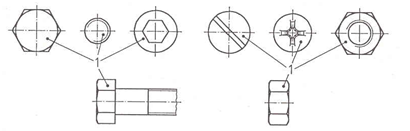
The minimum local layer thickness on fasteners is measured at the points shown in the figure below.

Diagram showing measurement locations for local coating thickness on bolts, screws and nuts

The average layer thickness of a batch must be determined using the method described in ISO 4042, annex D. Unless agreed otherwise, the local layer thickness must be measured.

Frequently Asked Questions

What is the difference between zinc electroplating and hot-dip galvanising?

Zinc electroplating deposits a thin, uniform layer, typically 3–20 µm, via an electrolytic bath. This gives a smooth finish suited to threaded fasteners. Hot-dip galvanising immerses parts in molten zinc, creating a thicker coating, typically 45–100 µm, with superior outdoor durability but a rougher surface that can affect thread fit. Electroplating is preferred for precision fasteners; hot-dip galvanising is better suited to heavy structural applications.

Is zinc electroplating RoHS and REACH compliant?

Yes, when combined with trivalent chromium Cr(III) passivation. Traditional yellow and green passivations contain hexavalent chromium Cr(VI), which is restricted under RoHS, REACH and ELV regulations. Cr(III) thick-layer passivation offers equal or better corrosion protection without Cr(VI).

What causes hydrogen embrittlement in zinc-plated fasteners?

During electroplating, water in the electrolyte bath partly electrolyses into hydrogen ions, which can diffuse into the steel and form hydrogen molecules. This increases internal stress and can cause delayed brittle fracture under tensile load. Fasteners with tensile strength ≥ 1,000 MPa or hardness ≥ HV320 are most at risk and must be baked at 200–230°C within 4 hours of plating, according to ISO 4042.

How do I choose the right passivation type for my application?

Consider three factors:

  • Environment: indoor applications can use white/blue passivation; outdoor applications need Cr(III) thick-layer passivation or better.
  • Regulations: if RoHS or REACH compliance is required, use Cr(III) only.
  • Corrosion resistance: check the NSS hours in the comparison table above. For critical outdoor applications, consider zinc flake coatings instead.

What do the ISO 4042 coating codes mean?

The code consists of two letters and a number: the first letter identifies the coating metal, for example A = zinc; the number indicates minimum layer thickness; and the second letter specifies the gloss and passivation type. For example, A3L means zinc plating with at least 5 µm thickness and a bright finish with Cr(III) passivation. See the code tables on this page for all options.

Related Zinc-Plated Products

Looking for zinc electroplated fasteners? Browse our range:

All zinc-plated products are available with Cr(III) passivation for full RoHS/REACH compliance. Need a specific passivation type? Contact our technical team.

Last updated: July 2026

Do not close this page. This message will disappear, when the page is fully loaded.