text.skipToContent text.skipToNavigation
Leading standard

Norms and standards

The products you purchase on Fabory.com meet the strictest standards, including DIN and ISO. These organisations lead the development of technical standards. DIN focuses on national German standards, while ISO handles globally recognised standards. The guidelines promote uniformity, safety, and quality across various industries. We will explain the two standards in more detail below:

DIN (Deutsches Institut für Normung):

Many people are familiar with the term DIN, but what does this standard represent? DIN stands for Deutsches Institut für Normung, a leading German standards organisation that defines DIN standards for fastening materials and industrial products. Many of our materials adhere to DIN standards, ensuring quality and consistency.

din934

DIN 934

Hexagon nuts

View products

Zeskantbout

DIN 931

Hex bolts

View products

DIN 933

DIN 933

Hexagon head bolts

View products

DIN 7991

DIN 7991

Countersunk screws

View

History

DIN was established in 1917 as the 'Normenausschuss der deutschen Industrie' (NADI). The organisation was set up to create standards for German industry, but its work soon extended well beyond industrial products. To reflect this broader scope, it was renamed 'Deutscher Normenausschuss' (DNA) in 1926.

Structure and collaboration

After World War II, the organisation resumed its work in 1946, focusing on rebuilding the German economy and promoting international cooperation. It became a full member of the International Organization for Standardization (ISO) in 1951 and was a founding member of the European Committee for Standardization (CEN) in 1961. In 1975, it was renamed 'Deutsches Institut für Normung' (DIN) and officially recognised as Germany's national standards body.

Quality and reliability

Today, DIN is one of the world's leading standards institutes and sets standards for nearly every conceivable product and process. DIN standards are synonymous with quality and reliability. With over 30,000 standards in its portfolio, DIN contributes to harmonising technical standards worldwide and promotes innovation, safety, and sustainability in various sectors. We are proud that many of our products are manufactured to DIN standards.

ISO and DIN fastening standards

ISO (International Organization for Standardization):

ISO standards are globally recognised as a benchmark for quality and safety. Many of our products are manufactured to ISO standards, and Fabory's own management systems are certified to ISO 9001 for quality management and ISO 14001 for environmental management.

History

ISO was officially founded on 23 February 1947 and has grown to become one of the most influential standards organisations worldwide. Its predecessor was the International Federation of the National Standardizing Associations (ISA), founded in 1926, which suspended its activities in 1942 during World War II. After the war, delegates from 25 countries met in London in October 1946 and agreed to create a new international standards body, leading to the founding of ISO.

Equality

The short name ISO is derived from the Greek word 'isos', meaning 'equal'. Because the organisation's full name would produce a different abbreviation in each language, its founders chose ISO as a short form that is the same in every language.

Quality, environment and information

Since 1947, ISO has published more than 25,000 international standards that are used worldwide across a wide range of industries. Well-known examples include ISO 9001 (quality management), ISO 14001 (environmental management) and ISO/IEC 27001 (information security).

Operating uniformly

ISO is a worldwide platform that harmonises technical standards. It provides a common language and basis for product quality, safety and sustainability. ISO standards promote trade, innovation and consumer protection, while helping organisations in different countries to operate uniformly. Fabory is proud to support this way of working.

ISO10642

ISO 10642

Countersunk screws

View products

ISO4014

ISO 4014

Hex bolts

View products

ISO4035

ISO 4035

Low hex nuts

View products

ISO4032

ISO 4032

Hexagon nuts

View products

EN (European Standard):

European Standards, also known as EN standards, are technical standards adopted at European level to ensure that products and processes meet uniform requirements. They are developed by the European standardization organisations, mainly the European Committee for Standardization (CEN), in collaboration with industry, governments and other stakeholders. They facilitate trade, support safe working conditions and make products more reliable in sectors such as construction, automotive and aerospace. In construction, for example, structural bolting assemblies are used that comply with EN 15048 or EN 14399.

History

EN standards were introduced to harmonise quality and technical specifications across Europe. Since its founding in 1961, CEN has played an important role in developing common European standards. Once a European Standard is published, every national standards body in the CEN network must adopt it as a national standard and withdraw any conflicting national standards. This facilitates international trade and ensures consistent quality and safety.

Structure and collaboration

European Standards are developed by technical experts from the 34 member countries of CEN and CENELEC. More than 60,000 experts are involved in the CEN network, helping to ensure that standards reflect the latest industrial developments and technologies. This process is based on collaboration, transparency and consensus, with input from industry, governments and social organisations. As a result, EN standards are not only technically robust but also widely supported by industry and government agencies, increasing their acceptance and application across different sectors.

Quality and reliability

Fasteners that comply with EN product standards are tested for the properties specified in those standards, such as mechanical strength and, depending on the product, suitability for preloading or corrosion protection. For example, structural bolting assemblies to EN 14399 are tested for their behaviour during preloading, which is crucial for structural integrity in steel construction. EN 1090, in turn, sets out the requirements for the execution of steel structures, including the installation of bolted connections. Harmonised European Standards such as EN 14399 and EN 15048 also form the basis for CE marking under the EU Construction Products Regulation, making market access easier and strengthening trust between suppliers and customers.

In short, EN standards are essential for ensuring quality, safety and international trade opportunities. They ensure that companies, regardless of location, can rely on products that consistently meet high standards.

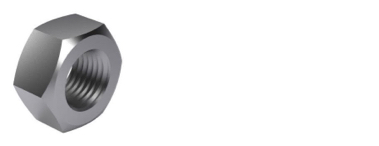
Leadingpage HV

EN 14399

HV structural bolts

View products

EN 15048

EN 15048

Structural assemblies

View products

EN 16983

EN 16983

Disc springs

View products

EN 1664

EN 1664

Hexagon nuts with flange

View products

Masters in Fasteners

With product knowledge, calculations and tests, we have the correct design and application of specific fasteners. Our range of 120,000 fasteners in any design, size and material type requires efficient stock management that you can rely on. The RFID application is one of the smart solutions Fabory Logic offers you. Every solution provides valuable support for your company's stock management. This creates Peace of Mind, allowing your employees to focus on their core tasks.

Assortment

Fabory is the ideal choice for all your fastening needs. Our product portfolio includes a wide range of standard fasteners and custom solutions for various applications, complemented with C-parts.

Fabory Logic

Fabory helps you access Fasteners and C-parts and uses innovative dashboards to provide insights into your consumption, helping you reduce your TCO. Fabory Logic offers RFID, Optical-Eye, Weight Scales, and Merchandiser services.

QA/QC & Engineering

Fabory prioritises quality and reliability, strongly emphasising refined quality management and specialised control systems to support your fastener selection.

Do not close this page. This message will disappear, when the page is fully loaded.