Conception pratique des ancrages – Contrôles clés pour un ancrage fiable
Le choix d’un ancrage ne consiste pas simplement à sélectionner un produit dont la capacité de charge est supérieure à la force appliquée. La fiabilité d’un ancrage dépend de l’ensemble de l’application, notamment du matériau support, de l’état du béton, des charges, de la géométrie de l’ancrage, des distances au bord, des entraxes, de la profondeur d’ancrage et de la méthode d’installation.
Pour les applications structurelles, ces facteurs doivent être considérés ensemble avant le début de l’installation. Un ancrage bien conçu peut également contribuer à éviter une complexité inutile, des pièces à fixer surdimensionnées et des travaux d’installation supplémentaires.
Une approche pratique de la conception des ancrages
Les étapes suivantes fournissent un cadre pratique pour évaluer une application d’ancrage. Pour les ancrages structurels post-installés dans le béton, la conception finale doit être vérifiée à l’aide des exigences de calcul applicables, conjointement avec les données de performance et les conditions du système d’ancrage sélectionné.
1. Identifier le matériau support
Commencez par déterminer précisément le matériau dans lequel l’ancrage sera installé. Le béton, la maçonnerie pleine, la maçonnerie creuse, le béton cellulaire et les matériaux en panneaux se comportent différemment et nécessitent des systèmes d’ancrage conçus pour leurs caractéristiques spécifiques.
Pour les applications dans le béton, des facteurs tels que la résistance du béton, l’épaisseur de l’élément et le fait que le béton soit fissuré ou non fissuré peuvent influencer les performances de l’ancrage.
Découvrir les matériaux supports pour l’ancrage >
2. Comprendre les charges appliquées
Déterminez les forces que l’ancrage doit reprendre. Il peut s’agir de charges de traction, de cisaillement ou d’une combinaison des deux.
L’application peut également introduire des efforts de flexion ou des charges excentrées lorsque la force agit à distance de la surface du matériau support. La direction et la répartition des charges peuvent influencer de manière significative à la fois le choix de l’ancrage et la géométrie de l’assemblage.
En savoir plus sur les charges appliquées aux ancrages >
3. Déterminer si le béton peut être fissuré
Le béton structurel peut développer des fissures dans les zones soumises à des contraintes de traction. Un ancrage installé dans une zone où des fissures peuvent apparaître doit, lorsque cela est requis, être adapté à ces conditions.
S’il n’est pas possible de considérer de manière fiable que le béton restera non fissuré, l’ancrage doit être évalué pour une utilisation dans du béton fissuré à l’aide d’un système d’ancrage approprié et des conditions de calcul correspondantes.
Comprendre le béton fissuré et non fissuré >
4. Sélectionner un type d’ancrage adapté
Une fois le matériau support et les conditions de charge connus, différentes technologies d’ancrage adaptées peuvent être envisagées.
Selon l’application, les options peuvent notamment inclure :
- Ancrages mécaniques à expansion
- Vis à béton
- Ancrages à sous-coupe ou à verrouillage mécanique
- Systèmes d’ancrage chimiques ou collés
- Ancrages conçus pour la maçonnerie ou les matériaux supports creux
Le choix approprié dépend de bien plus que de la seule capacité de charge. Les exigences d’installation, l’état du béton, les distances au bord disponibles, les entraxes, l’environnement et les approbations produit pertinentes doivent également être pris en compte.
Découvrir les principaux types d’ancrages >
5. Vérifier la distance au bord, l’entraxe et la profondeur d’ancrage
La position d’un ancrage dans le matériau support influence la manière dont les charges sont transférées au béton environnant.
Les paramètres géométriques importants peuvent notamment inclure :
- La distance entre l’ancrage et le bord du béton
- L’entraxe entre les ancrages voisins
- La profondeur d’ancrage effective
- L’épaisseur de l’élément en béton
- La configuration du groupe d’ancrages
Des entraxes ou des distances au bord réduits peuvent diminuer la résistance disponible, car les ancrages voisins ou les bords du béton influencent la même zone de transfert des charges.
Il n’existe pas de valeur minimale universelle d’entraxe ou de distance au bord applicable à tous les ancrages. Les valeurs spécifiques au produit et le calcul structurel doivent être utilisés.
Découvrir les conditions d’ancrage >
6. Déterminer la méthode de montage
La manière dont la pièce à fixer est positionnée et dont l’ancrage est installé fait également partie de la conception.
Les configurations courantes comprennent :
- Montage préalable – l’ancrage est installé avant le positionnement de la pièce à fixer
- Montage traversant – l’ancrage traverse la pièce à fixer et pénètre dans le matériau support
- Montage à distance – la pièce à fixer est positionnée à distance de la surface du matériau support
Les configurations de montage à distance, en particulier, peuvent introduire des efforts supplémentaires de flexion ou des forces excentrées et doivent être évaluées en conséquence.
Découvrir les méthodes de montage des ancrages >
7. Vérifier l’approbation du produit et la documentation technique
Pour les applications structurelles, un produit ne doit pas être sélectionné uniquement sur la base d’une valeur de charge indiquée dans un catalogue.
L’Évaluation Technique Européenne (ETE) correspondante fournit des informations importantes sur les conditions dans lesquelles un système d’ancrage a été évalué.
Selon le produit, cela peut notamment inclure :
- Les matériaux supports approuvés
- Les classes de résistance du béton
- Le béton fissuré ou non fissuré
- Les dimensions des ancrages et les profondeurs d’ancrage
- Les distances au bord et les entraxes
- Les conditions de charge
- Les exigences d’installation
- Les performances au feu ou sismiques lorsqu’elles ont été évaluées
Le domaine d’application de l’approbation doit correspondre à l’application réelle.
En savoir plus sur la documentation ETE et DoP >
8. Calculer l’ancrage complet
Pour les ancrages structurels post-installés dans le béton, les différents paramètres de conception ne doivent pas être vérifiés isolément.
Le calcul doit tenir compte de l’interaction entre les forces appliquées, le système d’ancrage, l’état du béton et la géométrie de l’assemblage. Selon l’application, les vérifications pertinentes peuvent notamment concerner la résistance de l’acier, l’arrachement, la rupture du béton, les effets de bord et l’interaction entre traction et cisaillement.
La norme EN 1992-4 fournit le cadre européen de conception des fixations destinées à être utilisées dans le béton, en combinaison avec les données de performance spécifiques au produit issues de l’ETE correspondante.
Conception des ancrages en un coup d’œil
Application
Identifiez le matériau support, l’état du béton, les charges, l’environnement et les exigences de performance.
Géométrie
Vérifiez la position de l’ancrage, l’entraxe, la distance au bord, la profondeur d’ancrage, l’épaisseur de l’élément et la géométrie de la pièce à fixer.
Vérification
Vérifiez l’ancrage complet par rapport aux exigences de calcul pertinentes, aux données de l’ETE et aux conditions d’installation.
L’ancrage le moins cher n’est pas toujours la solution la plus économique
Le prix unitaire de l’ancrage ne représente qu’une partie du coût global d’un assemblage d’ancrage.
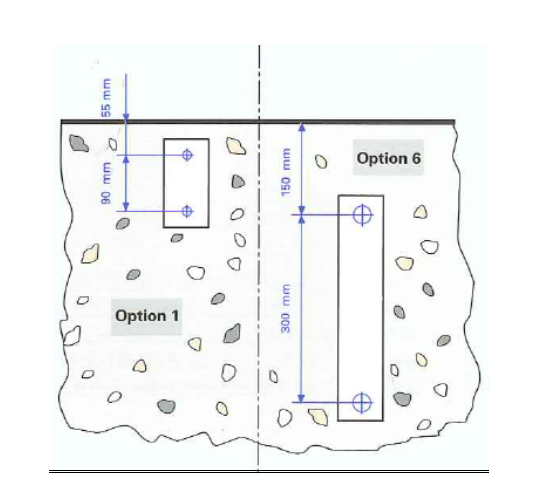
Un produit qui semble moins cher peut nécessiter des distances au bord plus importantes, des entraxes plus grands, des points de fixation supplémentaires ou une conception différente de la pièce à fixer afin de satisfaire aux exigences de l’application.
Cela peut influencer :
- Le nombre d’ancrages nécessaires
- Les dimensions et l’épaisseur de la pièce à fixer ou de la platine
- Le temps de forage et d’installation
- La complexité de la conception
- Les besoins en matériaux
- L’accessibilité lors de l’installation
À l’inverse, un système d’ancrage dont le coût unitaire est plus élevé peut permettre de réaliser un assemblage plus compact ou plus pratique.
Le choix de l’ancrage doit donc prendre en compte l’ensemble de la solution de fixation plutôt que de comparer uniquement les prix unitaires des ancrages.
Efficacité de la conception et géométrie des ancrages
Un ancrage plus adapté ne signifie pas nécessairement un ancrage de plus grande taille.
La sélection d’un système d’ancrage dont les performances évaluées correspondent étroitement à l’application peut parfois permettre une configuration plus efficace, par exemple en optimisant l’utilisation des distances au bord, des entraxes ou des conditions d’ancrage disponibles.
L’objectif n’est pas de maximiser la taille de l’ancrage, mais d’identifier une solution qui répond aux performances requises dans la géométrie réelle de l’assemblage.
Erreurs courantes lors de la conception des ancrages
De nombreux problèmes d’ancrage commencent avant même l’installation. Les erreurs courantes de conception et de sélection comprennent :
- Sélectionner un ancrage sur la base d’une seule valeur de charge publiée
- Ne pas vérifier si le béton est fissuré
- Ignorer les charges de cisaillement ou les charges combinées
- Supposer que la distance au bord n’a aucun effet sur la résistance
- Positionner les ancrages trop près les uns des autres
- Ne pas prévoir une profondeur d’ancrage suffisante
- Ignorer l’épaisseur de l’élément en béton
- Utiliser un ancrage en dehors du domaine couvert par son ETE
- Ne pas tenir compte de l’épaisseur de la pièce à fixer
- Supposer que l’aptitude au béton fissuré signifie également une aptitude sismique
- Ne pas tenir compte des conditions d’installation et d’environnement
Liste de contrôle pratique pour la conception d’ancrages
Avant de finaliser une solution d’ancrage structurelle, vérifiez que vous pouvez répondre aux questions suivantes :
- Quel est le matériau support ?
- Quelle est la résistance du béton ?
- Le béton est-il fissuré ou non fissuré ?
- Quelles charges de traction et de cisaillement sont appliquées ?
- Existe-t-il des charges excentrées ou des effets de flexion ?
- Combien d’ancrages composent l’assemblage ?
- Quelles distances au bord sont disponibles ?
- Quel entraxe est disponible entre les ancrages ?
- Quelle profondeur d’ancrage peut être obtenue ?
- L’élément en béton est-il suffisamment épais ?
- Quelle est l’épaisseur de la pièce à fixer ?
- Quelle méthode de montage sera utilisée ?
- À quelles conditions environnementales l’ancrage sera-t-il exposé ?
- Des exigences relatives au feu ou aux actions sismiques s’appliquent-elles ?
- L’ETE de l’ancrage couvre-t-elle l’application prévue ?
- L’ancrage peut-il être installé exactement comme spécifié ?
Calculez les ancrages structurels avec le Fabory Anchor Calculator
L’évaluation manuelle de toutes les interactions au sein d’un ancrage structurel peut devenir complexe, en particulier lorsque plusieurs ancrages, des charges combinées ou des contraintes géométriques sont concernés.
Le Fabory Anchor Calculator vous aide à concevoir des ancrages post-installés pour une utilisation structurelle dans le béton conformément à la norme EN 1992-4.
Saisissez les paramètres de l’application afin d’évaluer les ancrages adaptés en fonction des conditions réelles de conception.
Le calculateur peut vous aider à :
- Évaluer les charges de traction et de cisaillement
- Calculer les conditions de charges combinées
- Concevoir pour du béton fissuré et non fissuré
- Prendre en compte les entraxes et les distances au bord
- Évaluer différentes configurations d’ancrage
- Évaluer les conditions d’incendie et sismiques, le cas échéant
- Identifier pourquoi certains ancrages ne satisfont pas aux exigences saisies
- Générer des rapports de calcul pour la documentation du projet
Utiliser le Fabory Anchor Calculator >
EN 1992-4 et conception pratique des ancrages
La norme EN 1992-4 fournit le cadre européen de conception des fixations destinées à être utilisées dans le béton. Elle permet d’évaluer le comportement de l’ancrage complet au lieu de se baser sur une seule valeur générique de charge.
Pour les ancrages post-installés, la conception est utilisée conjointement avec les données de performance spécifiques au produit et les conditions d’application définies dans l’ETE correspondante.
Selon l’ancrage, la conception peut prendre en compte des facteurs tels que :
- Charges de traction et de cisaillement
- Charges combinées
- Comportement des groupes d’ancrages
- Résistance et état du béton
- Distance au bord
- Entraxe entre les ancrages
- Profondeur d’ancrage
- Géométrie de l’élément en béton
- Modes de rupture pertinents
Cela fournit une base plus appropriée pour la sélection d’ancrages structurels que le recours à d’anciennes catégories génériques de conception ou à des comparaisons simplifiées entre produits.
De la conception à l’installation
Un calcul d’ancrage correct dépend toujours d’une installation correcte.
L’ancrage doit être installé en respectant le diamètre et la profondeur spécifiés du trou de forage, la procédure de nettoyage, la profondeur d’ancrage, la méthode de serrage ou de mise en place et, le cas échéant, le temps de durcissement.
Les conditions d’installation doivent donc être prises en compte dès la phase de conception et non uniquement après la sélection de l’ancrage.
Découvrir l’installation des ancrages et les méthodes de montage >
Découvrez davantage de conseils techniques sur l’ancrage
Poursuivez votre découverte des conseils techniques Fabory sur l’ancrage :
- Types d’ancrages >
- Comprendre les charges appliquées aux ancrages >
- Matériaux supports pour l’ancrage >
- Béton fissuré et non fissuré >
- Conditions d’ancrage >
- Installation des ancrages et méthodes de montage >
- Découvrir tous nos conseils techniques sur l’ancrage >
Besoin d’aide pour la conception d’un ancrage ?
Les applications d’ancrage structurel peuvent devenir complexes lorsque les charges, la géométrie de l’assemblage, l’état du béton et les contraintes d’installation interagissent.
Les spécialistes techniques de Fabory peuvent vous aider à évaluer les exigences de l’application, à identifier des solutions d’ancrage adaptées et à vous accompagner dans le processus de conception.
Contactez nos spécialistes techniques >
Questions fréquentes sur la conception pratique des ancrages
Retrouvez les réponses aux questions courantes concernant la sélection des ancrages, les calculs structurels et les décisions pratiques en matière d’ancrage.
De quelles informations ai-je besoin avant de sélectionner un ancrage pour béton ?
Vous devez connaître le matériau support, la résistance et l’état du béton, les charges appliquées, les distances au bord et entraxes disponibles, la profondeur d’ancrage requise, l’épaisseur de l’élément, la géométrie de la pièce à fixer, les conditions d’installation ainsi que les éventuelles exigences relatives au feu, aux actions sismiques ou à l’environnement. L’approbation produit correspondante doit également couvrir l’application prévue.
L’ancrage le plus résistant est-il toujours le meilleur choix ?
Non. Le choix de l’ancrage doit être basé sur l’ensemble de l’application et non uniquement sur la capacité maximale. La géométrie, les distances au bord, les entraxes, les exigences d’installation, la conception de la pièce à fixer, les approbations et la facilité de mise en œuvre peuvent tous influencer le choix du système d’ancrage le plus adapté.
L’ancrage le moins cher est-il toujours la solution la plus économique ?
Pas nécessairement. Un ancrage moins cher peut nécessiter davantage de points de fixation, des entraxes plus importants, une pièce à fixer plus grande ou des travaux d’installation supplémentaires. Il convient donc de considérer l’ensemble de la solution d’ancrage plutôt que de comparer uniquement les prix unitaires des ancrages.
Pourquoi la distance au bord et l’entraxe entre les ancrages sont-ils importants ?
Les ancrages transfèrent les charges au matériau support environnant. Lorsqu’un ancrage est positionné près d’un bord ou à proximité d’un autre ancrage, les zones disponibles pour le transfert des charges peuvent être affectées. Cela peut réduire la résistance de l’ancrage individuel ou du groupe d’ancrages et doit donc être pris en compte dans la conception.
Quelle norme est utilisée pour concevoir des ancrages structurels dans le béton ?
En Europe, la norme EN 1992-4 fournit le cadre de conception des fixations destinées à être utilisées dans le béton. Pour les ancrages post-installés, elle est utilisée conjointement avec les données de performance et les conditions d’application du système d’ancrage spécifique définies dans l’Évaluation Technique Européenne correspondante.
Le Fabory Anchor Calculator peut-il aider à sélectionner un ancrage adapté ?
Oui. Le Fabory Anchor Calculator vérifie les ancrages post-installés destinés à une utilisation structurelle dans le béton en fonction des paramètres de l’application saisis et indique les solutions qui satisfont aux exigences de conception pertinentes conformément à la norme EN 1992-4.